FROM THE BLOG
Moss on Asphalt Shingles: Clean, Repair, or Replace?
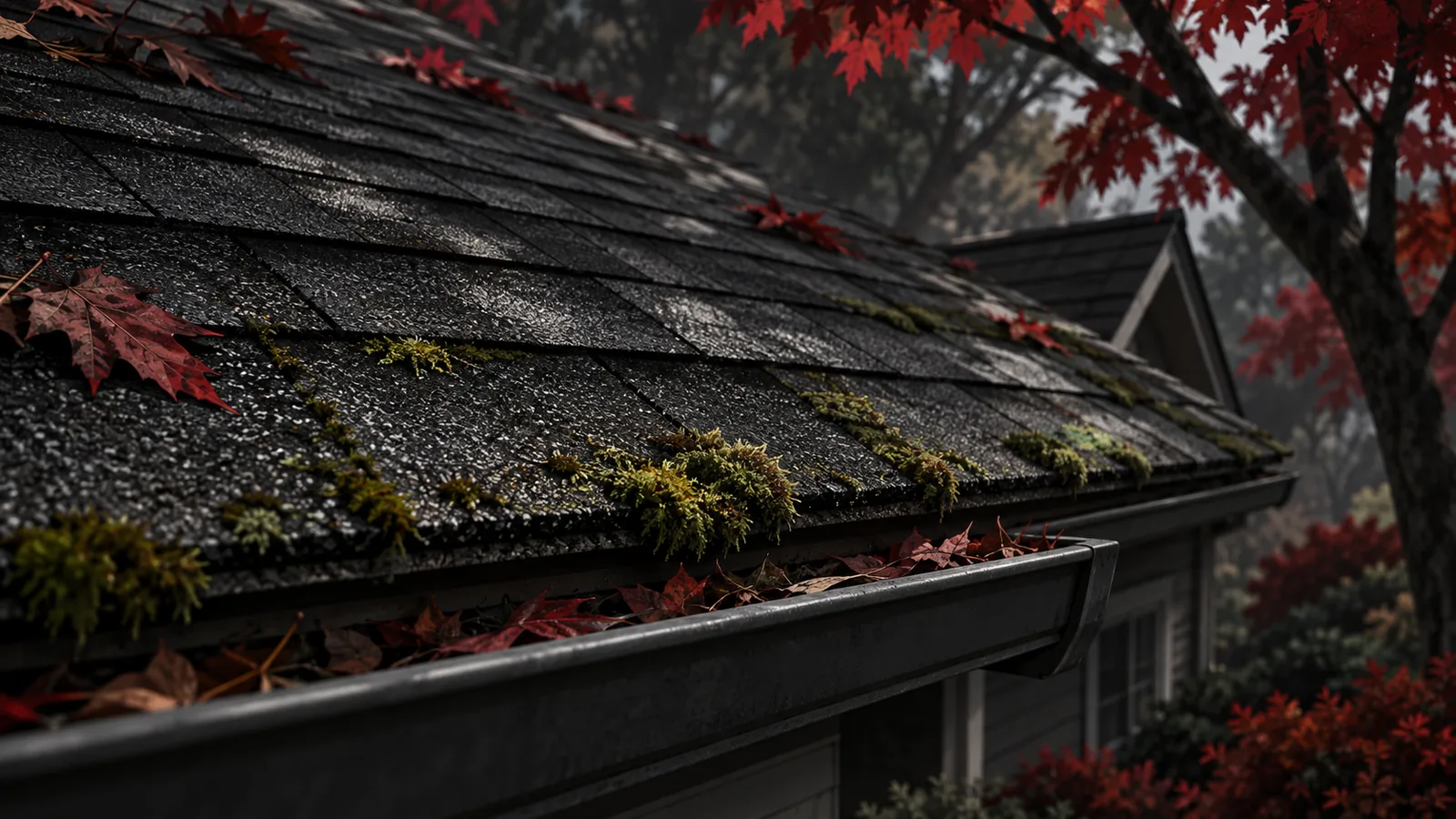
Moss on asphalt shingles calls for an assessment of both the growth and the roof beneath it. It does not automatically mean replacement, and it does not automatically make the roof a candidate for rejuvenation. The useful sequence is to identify the condition, choose a compatible cleaning approach if appropriate, and address any repair needs before considering treatment.
For the homeowner, the first step is not scraping a patch to see what happens. It is documenting the location from the ground and asking how a professional will evaluate the area without making assumptions. This guide explains the choices and the questions that help separate a cleaning issue from a larger roof problem.
Identify what you can see without disturbing it
Note where the growth appears: along an edge, below a tree, near a valley, or across a particular slope. Record whether you first noticed it recently or have older photographs showing the same area. Describe the appearance in ordinary words. You do not need to decide whether every patch is moss, algae, or something else before calling.
Keep the surface undisturbed until the assessor has seen it. Pulling off a patch removes part of the evidence and may affect the roof. Do not climb up to measure its thickness. A ground-level photograph, a description of the location, and an honest account of any previous cleaning are enough to begin a useful conversation.
Ask why the location matters
GAF's guidance on roof moss discusses moisture and the conditions in which moss grows. That makes the surrounding setting relevant to an assessment. Ask the contractor to consider the location, drainage, and nearby vegetation rather than discussing only how to remove the visible growth.
A homeowner should not infer that a tree must be removed just because moss is present. Tree decisions belong in a separate conversation with an appropriate professional. The same principle applies to drainage or roof details: ask what is observed, what may be contributing, and what remains uncertain. A tidy explanation is more valuable than a list of unrelated services added to a cleaning proposal.
The roof beneath the growth still needs evaluation
Ask how the condition of the affected shingles will be assessed and whether the growth limits what can initially be seen. The findings should state those limits. If preparation reveals a concern later, the contractor should explain it before proceeding with a treatment that was proposed under different assumptions.
Our roof inspection page and candidate guide explain why eligibility is not decided by roof age or appearance alone. Request a distinction between “cleaning recommended” and “treatment recommended.” Those are separate conclusions. A roof can qualify for one kind of work while another step is unnecessary, unsuitable, or dependent on further investigation.
Choose a cleaning plan that names the method
A proposal should identify the method and the manufacturer guidance behind it. Ask what material will be used, how it will be applied, what areas are included, and what the expected result is. Find out whether the process is intended to remove all visible growth immediately or whether appearance may change over time under the stated instructions.
Do not accept an unnamed “roof-safe” mixture as the whole explanation. Ask for relevant product information and a plan for nearby property. GAF cautions against pressure washing shingles because it can cause damage. Our cleaning and preparation guidance treats method selection as part of the work, not something a homeowner should improvise before an appointment.
Do not use scraping as a test of roof strength
A shingle that looks sound from the driveway is not permission to scrub, pry, or pressure-wash it. You are trying to learn about the existing condition, not create a new one. If someone proposes a hands-on inspection method, ask what it involves and how the findings will be documented.
Likewise, do not apply a household cleaner because it is familiar on another surface. Different materials and application conditions matter. Leave chemical selection and roof access to qualified providers following the applicable instructions. You can still be an active participant by requesting the scope, asking about limits, and keeping the records. You do not need to demonstrate the problem yourself.
Cleaning cannot substitute for a needed repair
If there is a leak, missing material, or another suspected defect, keep that issue on a separate repair list. A cleaner appearance after moss work does not confirm that a water-entry problem has been resolved. Ask who will evaluate repair concerns and whether the cleaning should wait until that evaluation is complete.
The repair and replacement comparison can help you ask which course addresses the actual condition. A treatment is not a way to rebuild damaged roofing materials. If the assessment points toward repair or replacement, the recommendation should explain why, with findings you can review rather than a general warning that any moss means the roof has failed.
Rejuvenation is an additional decision, not a moss remedy
Ask a provider recommending rejuvenation to explain its purpose independently of the cleaning. Which inspection findings support it? What product is proposed? What compatibility questions remain? Why is treatment being discussed rather than cleaning alone? A useful answer leaves room for the roof not to qualify.
The soy-based treatment guide identifies the product VRR discusses, and the warranty questions page lists the documents to review. Do not assume that removing moss resolves the shingle manufacturer's position on a field-applied rejuvenator. The cleaning method, shingle compatibility, and any treatment promise each need their own explanation.
Plan for what happens after the work
Ask for written aftercare and a clear follow-up contact. Find out what changes are expected, which observations should prompt a call, and whether any recommended maintenance belongs to another trade. A general instruction to “keep an eye on it” is less useful than knowing which area to photograph and what question the next review is meant to answer.
Store photographs and the work description with the date. If growth returns or a different condition appears, that record helps the next assessor understand the sequence. It also prevents a future provider from mistaking a recently cleaned area for an untreated starting condition. Keep any product information with the same record rather than relying on memory.
Compare options using the same questions
When two providers recommend different approaches, ask each to address the same points: what they believe the growth is, the roof condition, the cleaning method, any repair concern, the proposed outcome, and follow-up. Mark items that were not assessed instead of assuming a more confident presentation means a more complete inspection.
You can also ask what would make a provider change the recommendation after preparation begins. This is particularly useful when the growth obscures part of the surface. The answer should describe a pause-and-discuss process, not imply that an uncertain roof will automatically receive every step in a package regardless of what the crew finds.
Bring the right information to the first call
Have your address, any known roof history, and safe photographs ready. Mention previous cleaners or treatments if you know them. Note separate concerns such as ceiling staining, gutter problems, or recent repair work. Leave unknown details open rather than making a guess to complete a form.
VRR is based in Virginia Beach and considers work up to a two-hour drive away, subject to address and scheduling confirmation. Contact VRR to discuss the assessment. The Virginia homeowner guide explains the larger decision after the moss question has been separated into condition, cleaning, repair, and possible treatment.