
FROM THE BLOG
Do Black Streaks Mean Your Roof Needs Replacing?
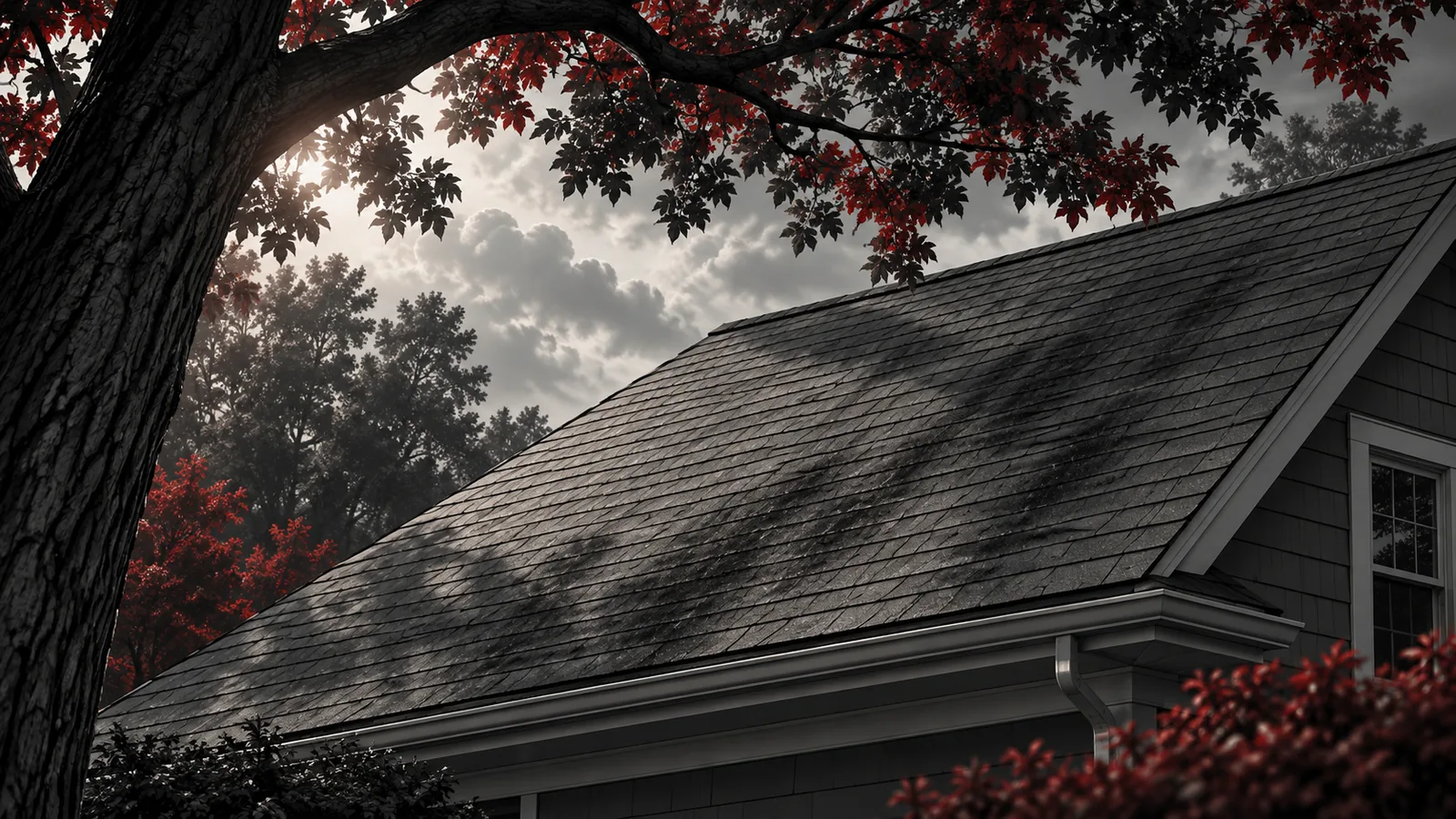
Black streaks do not, by themselves, mean an asphalt-shingle roof needs replacing. Algae can cause dark staining, but a photograph of a streak is not a complete diagnosis of the roof. The right next step is to identify the surface issue and assess the roof's condition separately. Cleaning, repair, replacement, and possible rejuvenation answer different problems.
If you can see discoloration from the street, you can start gathering information without getting on the roof. This guide helps you describe what you see, avoid jumping from appearance to a purchase, and ask for a recommendation that is supported by findings rather than a dramatic before-and-after photograph.
Describe the streaks without diagnosing them yourself
Record which part of the roof looks different and whether the pattern has changed. A simple description such as “dark vertical marks below the tree on the driveway side” gives an assessor something useful to investigate. Include the date and keep a photograph from a safe, repeatable position on the ground.
Try to compare images taken in similar light. A wet roof, shade, and a different camera angle can change how dark the surface appears. Do not use a single edited listing photo as proof of recent deterioration. Your notes do not need technical vocabulary. They should distinguish what you observed from what you suspect, so the inspection starts with a question rather than a predetermined treatment.
Algae is one explanation, not a remote diagnosis
GAF's technical bulletin on algae staining discusses algae-related discoloration on shingled roofs. That supports considering algae when dark streaks appear. It does not mean every dark mark on every roof has the same cause, or that an internet article can identify your roof's condition from a description.
Ask the assessor what features support the proposed explanation and whether anything else needs investigation. If the answer is tentative, it should be described that way. The signs of an aging roof can help you organize questions, but age, color, and condition should not be collapsed into one judgment. An older roof can have staining and a separate maintenance problem at the same time.
Separate the visible mark from the replacement decision
Ask two questions: “What is causing the mark?” and “What is the roof's condition?” The answers may be related, but they are not interchangeable. A recommendation to replace the roof should explain the condition findings that support replacement, not rely on the fact that a dark roof is unattractive.
Request photographs of the relevant areas and a description of what was accessible. Ask whether any parts need a roofer's further evaluation. If there are missing materials, flashing concerns, or signs of water entry, have those addressed as their own issues. Our rejuvenation versus replacement guide explains why a surface treatment should not be used to postpone work that the roof actually needs.
Bring interior concerns into the conversation
A ceiling mark or a damp area should be mentioned even if your original inquiry was about streaks outside. Record when you noticed it and whether it changes after weather. Do not assume that the dark roof surface explains the interior symptom, and do not assume cleaning will solve a water-entry problem.
An active leak deserves prompt attention from a qualified repair provider rather than a place on a future cosmetic-cleaning schedule. If the cause has not been identified, ask what further evaluation is needed. Keep the repair question open until someone explains the cause and scope. A clean-looking roof after an appointment is not confirmation that an unrelated leak has been fixed.
Ask what cleaning can realistically change
If staining is the issue, ask whether an appropriate cleaning method is recommended for the specific shingles. Request the proposed method, expected appearance change, limitations, and any follow-up instructions. A promise of a completely uniform color should be supported by an explanation of the roof's starting condition, not just a stock photograph.
The cleaning and preparation page is a useful starting point for that conversation. Ask who will protect nearby property and document existing damage before work. Do not pressure-wash the roof yourself or test a cleaner in an inconspicuous spot. “Only a small test” still changes the surface before a professional has assessed what is there.
Dark streaks are not proof that rejuvenation is needed
Rejuvenation concerns treatment of eligible aging shingles. Staining concerns a visible surface condition. A provider should explain why any proposed treatment is appropriate beyond making the roof look better. Ask whether cleaning alone addresses your stated concern and what evidence supports an additional service.
Our candidate checklist separates suitability from a sales promise. Before accepting treatment, review the exact product and the warranty questions with the relevant parties. Neither algae identification nor a successful cleaning establishes that a rejuvenator is compatible with the roof. You can agree to an inspection without agreeing in advance to an application.
Use photographs as records, not performance claims
A useful photo set labels the location, date, and purpose of each image. Ask for an overall view and detail views that explain the recommendation. If a contractor shows examples from elsewhere, ask whether they are that contractor's projects, manufacturer examples, or illustrations. Each can be informative, but they provide different kinds of evidence.
For your own roof, retain the original files when possible. A brighter after-photo taken in sunlight may look persuasive without answering any condition question. Ask what was actually done between images and whether the comparison documents cleaning, treatment, repair, or more than one activity. Appearance evidence should stay labeled as appearance evidence.
A useful assessment ends with choices
Ask for the recommendation in plain language: monitor, clean, investigate further, repair, consider treatment, or replace. There may be more than one step, but the reason for each should be stated. A written summary can also identify what was not inspected, preventing an assumption that every component was checked.
If the recommendation seems broader than your concern, ask what would happen if you addressed only the confirmed problem first. You are not asking for a guarantee about the future. You are asking which decisions are supported now and which remain uncertain. Our roof inspection service starts with that distinction rather than treating a visible streak as a diagnosis.
Keep a short record for the next conversation
After the assessment, store the findings, photographs, and proposed scope in one folder. Add a note about any work completed and who performed it. If the roof is cleaned, ask what changes should prompt a follow-up rather than repeatedly judging it against a remembered image of how it looked on the day.
This record helps if you later speak to a roofer, shingle manufacturer, or another contractor. It also makes it easier to compare two recommendations without relying on which presentation sounded more confident. You should be able to trace each proposed action back to a specific observation, an identified limitation, or a documented product requirement.
Start with your address and your actual concern
VRR considers appointments within up to a two-hour drive of Virginia Beach, with the address and schedule confirmed before booking. When you contact VRR, mention the streaks, any known roof history, and any separate water-entry concerns. Do not climb onto the roof to prepare for that conversation.
The goal is not to make a replacement decision from the driveway. It is to get the right inspection question in front of the right person. The Virginia homeowner guide brings together the larger treatment, evidence, and warranty decisions after the visible problem has been properly described.