FROM THE BLOG
Can Roof Rejuvenation Fix an Attic Ventilation Problem?
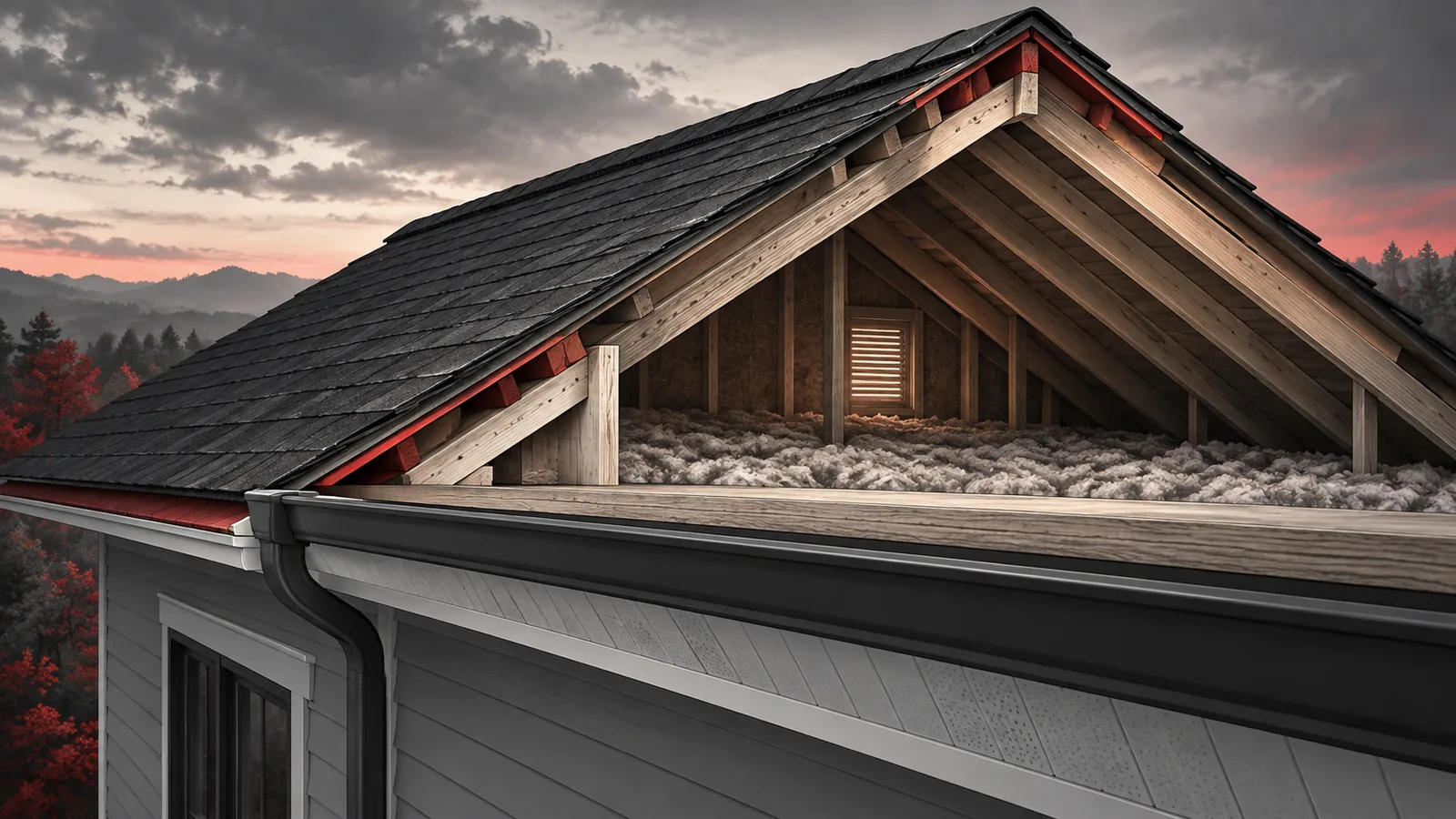
Roof rejuvenation does not correct an attic ventilation problem. A shingle treatment does not add an intake opening, clear an obstructed air path, or redesign an attic's ventilation. If ventilation or moisture is a concern, have that concern evaluated as a roof-system issue before assuming a surface treatment addresses it.
That does not mean every hot attic has the same defect, or that more vents are automatically the answer. The right approach depends on the home's construction and the actual findings. This guide helps homeowners separate a ventilation diagnosis from a rejuvenation proposal and ask useful questions without turning attic work into a do-it-yourself experiment.
Treat the roof as a system, not only a surface
From the driveway, the shingles are the most visible part of the roof. They are not the whole assembly. When someone recommends treatment, ask whether any separate concern involving ventilation, water entry, or other roof components has been identified. The proposed scope should state what treatment is intended to address and what remains outside it.
Our roof inspection page is the starting point for a condition conversation. If another specialist's evaluation is needed, that should be stated rather than hidden inside a broad assurance that the roof will be “restored.” A product intended for eligible shingles cannot be used as shorthand for correcting every condition affecting the roof system.
Ventilation advice needs the home's actual construction
GAF's attic ventilation guidance explains the relationship between intake and exhaust in a vented attic. That is useful background, but it is not a design for your home. Ask the evaluator to identify the existing assembly before recommending changes.
Do not assume that an article about a conventional vented attic applies unchanged to every roof or insulation arrangement. A qualified provider should explain what kind of system is present, what has been observed, and which guidance applies. If the explanation begins with a product recommendation before the construction has been identified, ask for the diagnosis first.
Describe symptoms without assigning the cause
Record what prompted your concern: a report from another contractor, an interior moisture observation, or a question about heat. Include dates and existing photographs. A homeowner's description is useful even when the cause is uncertain. “The room feels warm” is different from a confirmed ventilation defect.
Do not enter an unsafe attic or move insulation to gather evidence. You can ask what access is needed and who is qualified to investigate. If water entry is active, seek prompt repair evaluation rather than waiting for a possible treatment appointment. The point is to give the evaluator accurate observations without turning an assumption into the starting diagnosis.
Ask what was observed and what was not checked
A report should distinguish visible findings from conditions that were inaccessible or outside the assessment. Ask whether the recommendation is based on roof observations, an attic inspection, records from another trade, or a combination. If the conclusion depends on information that has not been obtained, have that dependency stated.
Request photographs or a written explanation where appropriate. You do not need every technical detail memorized, but you should be able to explain why a particular next step was recommended. This also makes it easier to share information with another provider without repeating a vague statement that “the ventilation is bad” and losing the evidence behind it.
Do not assume that adding a vent fixes the problem
A component recommendation should follow an assessment of the system. Ask how the proposed change fits the existing arrangement and whether other factors need review. Avoid treating a larger opening or an additional fan as a universal improvement based on a photograph or a product advertisement.
The same caution applies to blocking an opening, moving insulation, or sealing something because it looks drafty. Changes can affect more than the issue you are trying to solve. Let an appropriate professional explain the design and scope. Your task as the homeowner is to ask what finding supports the change and how the finished work will be checked.
Separate ventilation work from shingle treatment
If both are proposed, request distinct scopes. One should describe the ventilation-related work and its basis. The other should explain the proposed rejuvenator, the roof's eligibility, and the relevant product and shingle-manufacturer guidance. Ask whether one decision must be resolved before the other can proceed.
The soy-based treatment guide explains the material VRR discusses, while the candidate checklist keeps suitability conditional. A finding that ventilation needs attention does not automatically establish that rejuvenation is needed afterward. It may simply mean the system concern should be addressed and the roof reassessed before any additional service is considered.
Be cautious about promised comfort or energy outcomes
If someone presents shingle rejuvenation as a solution to a hot room or an energy bill, ask for evidence that applies to the actual product and the claimed outcome. A roof treatment's purpose should not expand to include benefits that were never established for your home. Ask which other building factors have been evaluated.
Keep the recommendation tied to the original concern. If the problem is comfort, a broader building or mechanical evaluation may be appropriate. If the concern is roof condition, ask for roof findings. Those questions can overlap, but they should not be bundled into a confident promise that one application will correct every symptom you have mentioned.
Warranty questions still need their own answers
Before considering a field-applied rejuvenator, review the shingle manufacturer's position on the exact treatment and obtain the relevant written product information. A ventilation improvement does not automatically settle that compatibility question. Nor does a contractor's statement that the roof is otherwise sound establish the terms of any warranty.
Our warranty checklist separates manufacturer coverage from product claims and workmanship promises. If several trades are involved, keep their scopes and completion records together. This helps a future provider understand what was changed, what was applied, and which company should answer a particular question without assuming one agreement covers all of the work.
Ask for a sequence that can change with the findings
The practical plan may be further evaluation, correction of a confirmed issue, and then reassessment of roof condition. Ask which steps are necessary now and which are conditional. A useful sequence names the decisions rather than committing you to every service before the first uncertainty has been resolved.
The repair and replacement comparison helps keep alternatives visible. If the roof needs repair or replacement, a surface treatment should not be used to avoid that conclusion. If no treatment is recommended, ask what observation or future review would be useful instead. The goal is an appropriate plan for the assembly, not a sale attached to every inspection.
Bring the right question to the appointment
When you contact a provider, say that you have a ventilation or moisture concern and want to know whether it affects any treatment discussion. Share existing reports rather than summarizing only their conclusions. Ask whether the provider handles the necessary evaluation or recommends another qualified trade for that part.
VRR is based in Virginia Beach and considers work up to a two-hour drive away, subject to address and scheduling confirmation. Contact VRR to discuss an assessment, and use the Virginia homeowner guide for context. Rejuvenation may be one question about a roof, but it is not a replacement for diagnosing how the roof system is functioning.